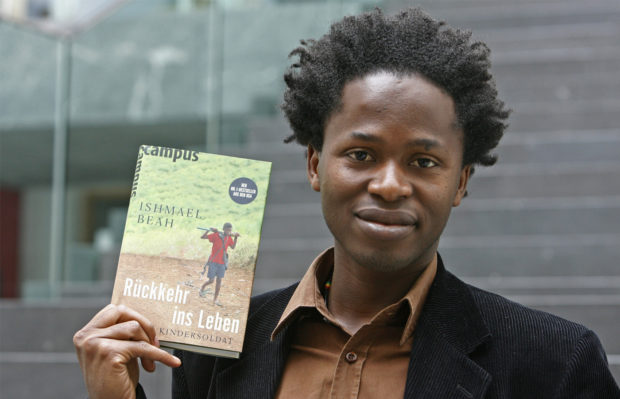
TL;DR – I present a short essay about the aesthetic/thematic functions of book covers in the child soldier narrative genre.
Two-and-a-half years ago I wrote my first (and likely only) post on Medium.com. It is based on a talk I that gave at the 2014 MLA conference using the PechaKucha format, in which speakers present a talk using 20 slides that appear for 20 seconds each. Initially I thought the format was a gimmick, but I came to appreciate its emphasis on brevity. I spoke about the functions of book covers in the child soldier narrative genre and my talk was well received. But after hearing from a colleague about the hassle and expense of securing permissions for images used in academic essays I doubted I could do anything more with the project. Rather than abandon it entirely, I converted the talk to a blog post protected by fair use doctrine. It begins as follows:
One of the most surprising literary trends of the past decade has been the proliferation of stories about child soldiers in Africa. Ishmael Beah’s 2007 memoir A Long Way Gone is the best-known example, but other works have achieved modest success in Western book markets as well. They include memoirs by other former child soldiers, as well as novels by well-known African writers like Chris Abani and Ahmadou Kourouma. At least one first-time author launched his career with a child soldier story: Uzodinma Iweala’s novel Beasts of No Nation was not only both a commercial and critical success when it was first published in 2005, but it has also recently been adapted into a feature film that received largely positive reviews upon its release last month.
One of the reasons why child soldier stories are so compelling is that their protagonists are both the victims of physical, emotional, and sexual abuse and also the perpetrators of violence. This tension between vulnerability and brutality presents a challenge to the people who are responsible for marketing books to readers and retailers. And because book covers have such a significant and lasting impression on potential buyers, this issue is of particular importance for the graphic designers, art directors, and marketers who decide how a child soldier story appears on the bookshelf or among the pages of online retailers.
So: how do you visually represent the vulnerability of a child who is also a murderer or a rapist?
The problem is that even the most brilliant essays on Medium will go unnoticed, notwithstanding the public tagging system, unless/until the author cultivates an audience. My failure to do so relegated the post (and consequently the ideas) to obscurity. Now that I have decided to blog more frequently, albeit on a different platform, I thought it appropriate to begin with my one previous failed attempt. I link to the original post, rather than convert it, because I cannot easily reproduce Medium’s image-friend format here on WordPress.
I hope you enjoy it.